
Use of Enzymes in Laboratory Investigations: Enzyme-Based Assays
Limitations and Challenges of Enzyme-Based Assays
Enzyme-based assays are fundamental in laboratory investigations, yet they face challenges such as specificity, environmental variability, and stability concerns.
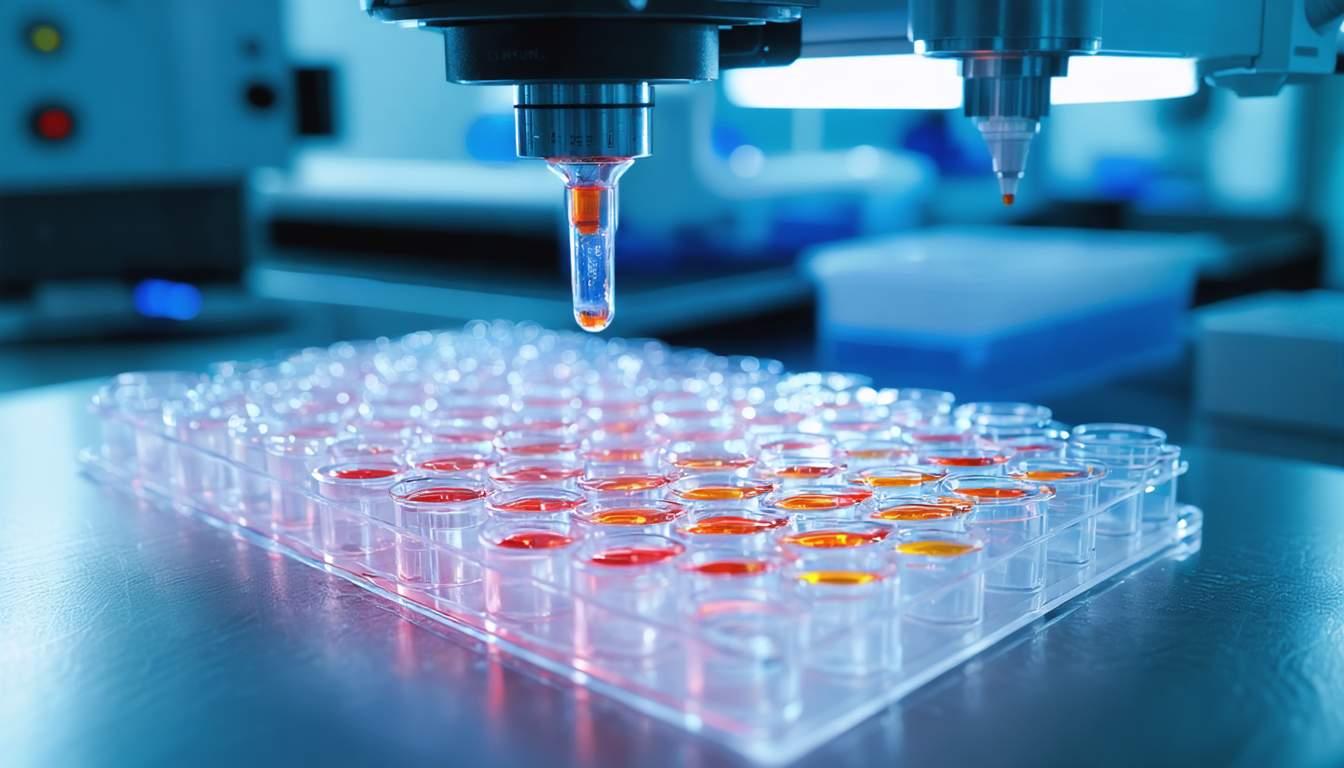
Use of Enzymes in Laboratory Investigations: Enzyme-Based Assays
Limitations and Challenges of Enzyme-Based Assays
Enzymes play a crucial role in laboratory investigations, particularly in enzyme-based assays used for diagnostics and research. These assays leverage enzymatic reactions to detect and quantify biological substances, making them indispensable tools in pathology.
Challenges of Enzyme-Based Assays
Specificity and Sensitivity Issues
Despite their effectiveness, enzyme-based assays face challenges in specificity and sensitivity, often resulting in false positives or negatives due to cross-reactivity.
Environmental Influences
Temperature, pH, and other environmental factors can significantly impact enzyme activity, leading to variability in assay results.
Stability and Storage Limitations
Enzymes are prone to degradation over time, requiring careful handling and storage conditions to maintain assay reliability.
Future Directions
Advancements in molecular pathology and enzyme engineering aim to overcome these limitations, enhancing assay precision and efficiency for clinical and research applications.
Tags
Recommended Reads
Explore related articles that might interest you

Use of Enzymes in Laboratory Investigations: Enzyme-Based Assays

Diagnostic Evaluation of Anemia Based on Presumed Etiology

Use of Enzymes in Laboratory Investigations: Enzyme-Based Assays

Eliciting patient history related to concomitant illnesses
Healing and Tissue Repair
Describe and develop a diagnostic plan to determine the etiology of anemia